
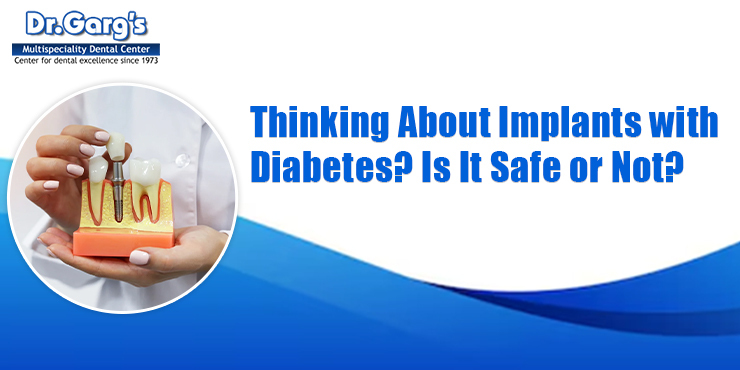
Thinking About Implants with Diabetes? Is It Safe or Not?
Dental implants have become one of the most reliable and long-lasting ways to replace missing teeth. Whether you have a single missing tooth, multiple missing teeth, or an entire set, dental implants can effectively restore both function and aesthetics.
However, many diabetic patients often ask an important question:
“Is it safe to get dental implants if I have diabetes?”
The answer isn’t a simple ‘yes’ or ‘no’; it depends on how well your diabetes is managed.
Understand the Link Between Diabetes and Dental Implants
Diabetes is a condition that causes high blood sugar levels. When blood sugar is high, it can affect the body’s natural healing process and increase the risk of infection.
Because dental implants involve a surgical procedure that implants the implant into the jawbone, proper healing is essential for long-term success. This makes diabetes an important consideration in implant treatment.
Related Blog – Dental Implants in Delhi – Long-Lasting Tooth Replacement & Care Tips
Is It Safe to Get Dental Implants with Diabetes?
The good news is that diabetes is not a complete contraindication for dental implants, it is a relative contraindication.
What does that mean?
- If your blood sugar levels are well controlled, dental implants are generally safe and successful.
- If your diabetes is uncontrolled, the risk increases, and treatment may need to be delayed.
Dentists usually recommend implants only when blood sugar levels are stable, to ensure proper healing and minimize complications.
Why Blood Sugar Control Matters
High blood sugar levels can lead to:
- Delay wound healing
- Increase the risk of infection
- Affect bone integration (implant bonding with the jaw)
For dental implants to be successful, they must fuse with the jawbone, a process called osseointegration. Poor blood sugar control can hinder this process, reducing the success rate of implants.
Read Also, This – Why Milk Teeth Are Just as Important as Permanent Teeth
Preoperative Screening for Diabetic Patients
Before undergoing dental implant surgery, diabetic patients should undergo proper medical examination.
HbA1c Test – A Key Indicator
The HbA1c test measures the average blood sugar level over the past 2-3 months.
- HbA1c less than 7% – Generally considered safe for implant surgery
- More than 7% – Indicates the need for better diabetes control before proceeding
Before scheduling the procedure, your dentist can work with your doctor to make sure your condition is stable.
Post-Operative Care for Diabetic Patients
After the implant procedure, maintaining good health becomes even more important.
Key Care Guidelines:
- Keep blood sugar levels under control
- Maintain excellent oral hygiene
- Follow all medication and dental care instructions
- Attend regular follow-up appointments
Contrary to popular belief, diabetic patients do not require very different post-operative care; consistency is the key to diabetes management.
Healing Time: What to Expect
Diabetics may take a little longer to recover from dental implant surgery than non-diabetics.
This is due to:
- Slower tissue repair
- Reduced immune response
However, with proper care and controlled diabetes, successful treatment and long-term implant stability can be achieved quite easily.
Dental Implants for Older Adults with Diabetes
Tooth loss is common among older adults, and many of them may also experience the following problems:
- Diabetes
- High blood pressure
- Heart-related issues
Despite these circumstances, dental implants are a very effective procedure if proper medical examination and precautions are taken.
Read Also, This – Dental Implants for Seniors: Costs, Benefits & Suitability
Benefits of Dental Implants for Diabetic Patients
When performed under controlled conditions, dental implants provide:
- Improved chewing ability
- Better speech clarity
- Enhanced facial aesthetics
- Prevention of bone loss
- Long-lasting tooth replacement solution
For people with diabetes, improving oral function can also help with better nutrition and overall health.
When Should You Avoid Dental Implants?
Dental implants may need to be postponed if:
- Blood sugar levels are consistently high
- HbA1c levels are above the recommended range
- There are active infections or poor oral hygiene
In such cases, your dentist will first focus on stabilizing your health before proceeding with treatment.
Read Also, This – One Missing Tooth Can Change Your Entire Smile – Don’t Ignore That Gap!
Final Thoughts
So, is it safe to get dental implants if you have diabetes?
Yes, if your diabetes is well controlled.
With proper planning, medical examination, and ongoing care, dental implants can be a safe and highly successful treatment option for patients with diabetes.
The key is in:
- Monitoring blood sugar levels
- Undergoing proper screening
- Following pre- and post-operative care guidelines
If you’re considering dental implants and have diabetes, consult with your dentist and doctor to create a safe and personalized treatment plan.
To Know Your Dental Concern. Click on this link – https://dental-clinic-delhi.com/contact-us/
Visit Clinic – https://maps.app.goo.gl/8GAB34saXVsKmFqz5


Leave a Reply
Want to join the discussion?Feel free to contribute!